Women risk being left without a pension for 14 years

A woman worrying about her finances

Women could risk emptying their pension pots 14 years too soon – and a decade earlier in their lifetime than men – according to modelling by a financial services provider. The research, released ahead of International Women’s Day on Saturday, March 8, found that, based on current pension withdrawal rates, women could empty their private pension savings by the age of 73.

Legal & General (L&G), which published the research, said that, with the average life expectancy of a 60-year-old woman in the UK sitting at 87, some female retirees could be left with a 14-year shortfall between their private pension funds running out and the end of their lives.

By comparison, men could see their pots run dry by the age of 83, the research indicated. With the average life expectancy of a 60-year-old man in the UK at 85, men could have two years of retirement without any leftover private pension savings.

Katharine Photiou, managing director of workplace savings at L&G, said that, after decades of saving, the ability to withdraw money from a pension can create a “lottery effect”. But she cautioned: “What seems like financial freedom now might turn into uncertainty later.”

The modelling used Office for National Statistics (ONS) life expectancy calculations as well as an Opinium survey among 3,000 people aged over 50 carried out in December 2024. The calculations made various assumptions about inflation and investment returns and that people would start making regular withdrawals when they turned 67 until their private pension pot ran out. It was also assumed that people had no other sources of income, such as property wealth or a guaranteed pension income based on someone’s salary.

People will also be entitled to the state pension, the size of which depends on factors such as national insurance (NI) contributions. The research indicated that women are typically withdrawing less from their pension than men but have less money saved into it to start with, at £40,000 versus £87,500 for men.

Of those receiving income from an income drawdown pension, women are receiving £625 per month on average, compared with £875 for men. However, women were more likely than men to have increased their withdrawal rate since they first started making withdrawals. More than a quarter (27%) of women making withdrawals had increased their withdrawal rate, compared with less than a fifth (19%) of men.

The research was released as a survey of 2,000 people for savings and investment app Moneybox, which found that nearly one in 10 (9%) women plan to start investing this year, while 13% intend to increase their investments. Investing more was found to be the top financial goal among women aged 25 to 34 years old, the survey by OnePoll found.

More than half (59%) of women who invested last year did so to grow wealth, 47% wanted to secure a comfortable retirement, and 34% were aiming to provide for family in future. Nearly a fifth (18%) of women who invested did so because they enjoyed it and treated it like a hobby.

London and Northern Ireland had the highest rates of female first-time investors last year, the Moneybox research indicated. Lower, part-time salaries and caring responsibilities can be obstacles to some women – and some men – being able to save adequately for later life.

Another study from money platform Intuit Credit Karma found that over half (59%) of parents have taken on new debt to afford maternity or shared parental leave, borrowing an average of £2,658. A quarter (25%) of these parents said they were still in debt when their child had started school.

Women were less likely than men taking parental leave to say they had moved to a job with enhanced parental benefits. A fifth (21%) of men taking shared parental leave had switched jobs to an employer offering enhanced benefits, compared with 9% of women taking maternity leave, the OnePoll survey of 2,000 people across the UK found.

Liverpool confirm 'multi-year' Adidas kit deal as Reds target big revenue hike

Liverpool have announced that Adidas will become their new kit partner from the beginning of the next season, following the conclusion of their current agreement with Nike at the end of the 2024-25 campaign. Reports from October indicated that the German sportswear brand had secured the tender to collaborate with the Reds, outbidding rivals including the incumbent kit supplier Nike and competitor Puma. The club has now revealed a 'multi-year deal', which is understood by the Liverpool Echo to span five years. It will be the third deal Liverpool has had with Adidas. The Reds anticipate a revenue boost from this new alliance. CEO Billy Hogan said: "Everyone at the club is incredibly excited to welcome Adidas back into the LFC family. "We have enjoyed fantastic success together in the past and created some of the most iconic LFC kits of all time. Adidas and Liverpool share an ambition of success and we couldn't be more excited to partner together again as we look forward to creating more incredible kits to help drive on pitch performance. We'd like to thank Nike for their support over the last five years and wish them well for the future." The partnership is set to commence on August 1, 2025, with Nike's designs being worn until the end of this season. In the past, new kits have often been unveiled before the season's end. However, with Liverpool on the cusp of a Premier League title and still vying for UEFA Champions League success, Nike aims to capitalise on the brand's exposure and partnership until the very end. Liverpool and Adidas have collaborated during some of the club's most triumphant eras and iconic trophy wins, initially from 1985-1996 and again from 2006-2012. During this period, the Reds secured numerous accolades, including three top-flight domestic league titles and three FA Cup victories. Bjørn Gulden, Adidas CEO, stated: "We are extremely excited that adidas and Liverpool Football Club are teaming up once again. The club is one of the biggest and most iconic names in world football with a huge fan base. "The jerseys worn during previous partnerships are some of the greatest ever created. We are honored to once again provide the players with cutting-edge technology to perform at the highest level and are looking forward to creating more classics for the fans." Although the deal's value to the Reds has not been disclosed, it is reportedly in the vicinity of £65million-plus, placing the club in the same guaranteed earnings bracket as Arsenal, Manchester City, and Chelsea. Furthermore, the potential for a percentage of LFC/Adidas merchandise sales could increase the deal's value even more. The club entered into a deal with Nike in 2019 for a fixed £35million per year. While the guaranteed annual sum was significantly lower than their competitors, it was substantially boosted by an additional 20% of sales from LFC/Nike merchandise reverting to the club, pushing the annual income beyond £60million. Liverpool have capitalised on relationships with such luminaries as Fenway Sports Group partner and basketball legend LeBron James, resulting in a special merchandise line, while a range with Nike's sister brand Converse was also launched. Last week, UEFA published its annual European Club Finance and Investment Report, which examines financial trends across the continent's football landscape and sheds light on some of the unseen factors that contribute to fielding a successful team. According to the latest report, Liverpool's kit and merchandising revenue generated €146million (£122.7million), slightly edging out Manchester United who sit in fifth place. For Liverpool, this meant that kit and merchandising revenue accounted for 19% of total revenue for the 2023-24 financial year - an increase of 11% compared to the same period 12 months earlier. Details of the new Adidas Liverpool kits - home and away - will be unveiled via club and Adidas channels and will be available for purchase from August 1, 2025.

Read more
Supermarkets see varied fortunes amid rising sales with Asda continuing to struggle

UK supermarket sales outpaced inflation in February as consumers sought budget-friendly indulgences. According to Kantar, take-home sales from grocers increased by 3.6 per cent in the four weeks leading up to 23 February, while prices saw a 3.3 per cent rise, as reported by City AM. However, this overall figure conceals a disparity among the UK's leading supermarkets. Asda witnessed a decline in sales, whereas Tesco and Sainsbury's managed to expand their market share. Grocery prices have been on an upward trajectory since August last year, but the growth rate is significantly lower than the double-digit figures observed during the cost-of-living crisis. Despite this, sales continue to lag behind inflation. Kantar reported that food inflation remained unchanged month-on-month. Prices are escalating most rapidly in sectors such as chocolate confectionery, juices and butters, while they're dropping fastest in cat and dog food, laundry and household paper products. Spending on deals experienced another surge in February, with purchases made on offers now representing 27.6 per cent of sales, a 0.3 percentage point increase compared to last year. Sally Ball, Kantar's head of retail, commented on the trend: "[One of the big headlines of the past few years has been consumers' hunt for value," She added, "You might think that people would shop around more to find the best deals but in fact, that's not the case. Households visited just under five different grocers this month, the lowest level in February since 2021. "The growth of supermarket loyalty schemes is partly behind this as shoppers use them to unlock exclusive discounts." Asda's sales continue to decline, with revenues totalling £4.6bn in the 12 weeks leading up to 23 February, marking a five per cent decrease year on year. The TDR-owned chain remains the only major grocery retailer to have lost market share over the past year. Asda has been tackling challenges such as competition from discounters Lidl and Aldi, substantial debt, strike actions, and costly separation from its former owner's IT infrastructure. Tesco has maintained its status as the UK's largest supermarket, capturing 28.3 per cent of the market with over £10bn in sales. Meanwhile, Sainsbury's also saw positive movement, nudging its market share from 15.5 per cent to 15.7 per cent compared to the same period last year. Morrisons now claims 8.6 per cent of the market share. Ocado experienced the fastest growth among retailers for the tenth month in a row, with spending surging by 9.6 per cent – holding steady with a 1.9 per cent market share. Aldi celebrated a market share of 10.3 per cent after enjoying a 4.9 per cent increase in sales – its most significant boost since January 2024.

Read more
Pukka Pies warns price rises are 'inevitable' as it battles 'significant' inflation

Pukka Pies, a staple in chip shops across the UK, has warned that price increases are "inevitable" as it grapples with "significant levels of power and labour inflation." The Leicester-based firm revealed that it had postponed price hikes during its most recent financial year to "assess the mid to long-term implications from the underlying inflation", but has since determined that rises are necessary, as reported by City AM. These remarks were included in the company's accounts for the financial year ending 25 May, 2024. Over this period, the company saw its turnover rise from £79.1m to £85.2m, while pre-tax profit fell from £6.7m to £3.4m, according to newly-filed accounts at Companies House. The firm's UK turnover increased from £78.7m to £84.7m, and European sales rose from £353,527 to £493,707. Elsewhere in the world, turnover grew from £8,749 to £12,992. Founded by the Storer family in 1963, Pukka Pies initiated an investment search in March 2024, leading to a corporate restructure. A statement approved by the board read: "The directors are satisfied with business performance during its first year of trading as a group following the corporate reorganisation which inserted two new companies into the corporate structure." Pukka Pies also noted that its turnover increase was due to new product launches, gaining new customers, improved distribution among existing customers, and growth in the retail category. The directors expressed their satisfaction with the company's operating profit before exceptional items, which dropped from £6.8m to £4.5m, citing the long-term benefits expected from a recent corporate restructuring. Pukka Pies commented: "Over the course of the financial period the group has seen significant levels of power and labour inflation." The firm initially delayed implementing higher sales prices to evaluate the mid to long-term implications of underlying inflation but has since concluded that price increases are inevitable over the next 12 months. Regarding its future, Pukka Pies stated: "The group continues to build brand awareness and the directors expect the business to grow over the coming years."

Read more
Airbnb's top boss in UK and Northern Europe quits after four years in role

Amanda Cupples is poised to leave her post as Airbnb's lead executive for the UK and Northern Europe after a four-year tenure. Appointed as general manager for the region in March 2021, she oversaw operations within the UK, Ireland, Netherlands, and the Nordics, as reported by City AM. An Australian national, Cupples joined Airbnb following a spell at digital health firm Babylon Health, where she initially took on the role of chief commercial officer before transitioning to chief operating office vice president of business performance. Before her position at Babylon, she held the title of president, international at Deluxe Entertainment Services and occupied several high-profile leadership positions at EMI Music. Commencing her professional journey at law firm Slaughter and May, Cupples is also an investor and strategic advisor to online publishing platform The Pigeonhole. A spokesperson for Airbnb stated: "Amanda Cupples, general manager of Northern Europe, is leaving Airbnb to pursue new opportunities, effective from next week. "We are grateful for her significant contributions to our company over the past four years and wish her the best in future endeavours." A definitive appointment to succeed Cupples will be made public in the forthcoming months. Until then, Emmanuel Marill, director of Airbnb EMEA, assumes temporary leadership responsibilities for the region. In the first fiscal cycle with Cupples at the helm, Airbnb UK Limited saw revenues of £93.9m and a pre-tax profit of £51.5m, benefiting from a surge in bookings once lockdowns lifted. As per the latest financial statements, Airbnb UK declared a turnover of £77.7m and a pre-tax profit of £10.3m. In February of the previous year, Airbnb expressed support for the former Conservative government's decision to implement registration and planning rules for short-term lets in England. The company acknowledged the "there are historic housing challenges facing some communities in the UK" but also stated that "while short-term lets are not the root cause of housing challenges, we want to be a responsible partner and help make communities stronger and work hand in hand to address the challenges they face". At that time, Cupples remarked: "The introduction of a short term lets register is good news for everyone." He further commented: "Families who host on Airbnb will benefit from clear rules that support their activity, and local authorities will get access to the information they need to assess and manage housing impacts and keep communities healthy, where necessary."

Read more
Debenhams is back as Boohoo makes major announcement

Boohoo has announced it is rebranding as Debenhams Group as the online fashion firm hailed the turnaround of the department store brand it bought out of administration three years ago. Boohoo said it has successfully completed a turnaround of Debenhams over the past few years and that it is now a “majority contributor to group profitability”. It said it will roll out the operating model at Debenhams across the wider firm, using the overhaul at the brand as a “blueprint for the wider turnaround of the group”. “Reflective of this major strategic change, the group will go forward as Debenhams group with immediate effect,” Boohoo said. Dan Finley, group chief executive of Boohoo, said: “Debenhams is back. The iconic British heritage brand, bought out of administration, has been successfully turned around. “Rebuilt for the future and transformed into Britain’s leading online department store.” He added: “We go forward as Debenhams Group. This is a defining moment in our journey, reflective of our new strategy, new leadership and new beginnings.” In 2019, Debenhams entered administration for the first time. Several of its stores were closed, and it sought buyers. The pandemic significantly worsened its financial situation. With stores closed during lockdowns and consumer spending down, Debenhams saw a further drop in sales. In 2020, Debenhams went into administration for a second time, and Boohoo Group, an online fashion retailer, acquired Debenhams' brand and intellectual property. However, Boohoo did not purchase Debenhams’ physical stores. After the Boohoo deal, Debenhams began closing its remaining stores, marking the end of its long history on the British high street. The closures continued into 2021, and the company officially ceased trading in physical locations.

Read more
Deliveroo called 'underappreciated' after quitting Hong Kong as rivals 'muscle it out'

London brokerage firm Panmure Liberum has hailed Deliveroo as "underappreciated" following its strategic withdrawal from the Hong Kong market. The firm downplayed concerns that the takeaway behemoth might be ousted from other markets by wealthier rivals, labelling such worries as mere "noise". This morning, Deliveroo disclosed its departure from Hong Kong, offloading some assets to Foodpanda and winding down others, as reported by City AM. The London-traded delivery service explained that persisting in Hong Kong "would not serve shareholders' best interests" Panmure Liberum analysts believe that Deliveroo's financial performance will see a positive impact from this move: "Both earnings before interest, tax, depreciation and amortisation (EBITDA) and group GTV growth [revenue] are set to benefit from this market exit," they commented. "[We think] Deliveroo can generate a level of cash flow over the long-term that is currently underappreciated by the market," Panmure further stated. While acknowledging the narrative that Deliveroo could be forced out of smaller markets by larger, better-funded competitors, analysts insisted that such fears should be considered "noise around the investment case." Keeta, an aggressive on-demand delivery titan from China known for its price-cutting tactics, entered the Hong Kong scene in May 2023 and swiftly dominated order volumes by the following May. Data from Measurable AI indicates that by January 2025, Keeta had captured a commanding 55.2 per cent market share. Analysts have noted: "With Hong Kong one of the most discount sensitive markets in Deliveroo's portfolio, it's clear that Meituan's Keeta has been able to muscle it out of the market through discount spend." In 2024, Hong Kong accounted for five per cent of Deliveroo's revenue and negatively impacted international revenue growth by five percentage points. Deliveroo reported a six per cent rise in revenue in the fourth quarter of 2024, aligning with its projected growth of between five and nine per cent.

Read more
Historic Coventry shop to close after 100 years as owner says 'retail is also not as nice as it used to be'

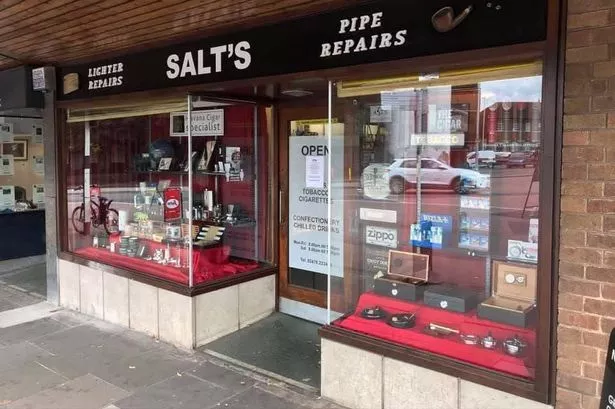
A historic Coventry shop is set to close its doors permanently after more than a century in business. Tobacconist and lighter repair specialist Salts was founded by Harry Salt in Parkside, Coventry, in 1916 before relocating to New Union Street in 1961.It was run by the Salt family until it was taken over by Mark Kendall in 2019. Mark, a Coventry local, said he was "really sad" about the impending closure on March 29. He revealed that the decision to shut down was reluctantly made due to several factors. In an interview with Coventry Live, 49 year old Mark said: "Footfall never came back after COVID. Retail is also not as nice as it used to be because there are the issues of break-ins and theft and all those things that happen in city centres to retailers." He also highlighted the challenges posed by the illegal tobacco trade in the city. He said: "Coventry is rife with illegal stuff so the people selling it legally cannot compete." Despite the sadness surrounding the closure, Mark said he had relished his time at Salts. He said: "I have loved it! I always wanted to run a shop, so I have really enjoyed it." Customers have been sharing their 'fond memories' of visiting Salts. Many nostalgically recalled trips to the city centre with their grandparents many years ago, Mark said. He added: "It is quite generational, so a lot of people have fond memories of relatives, they used to come here as children with their grandparents, so obviously it holds a lot of sentiment... and a lot of granddaughters and grandsons just remembering when times were more simple, and you remember stuff about your childhood and your now-departed relatives, so a lot of moments for people." Mark added: "We have had a blast! Thanks for all of the support we have had from our regulars, they will be missed."

Read more
Deliveroo swings to first full year profit as orders jump in UK and Ireland

A surge in takeaway and grocery orders across the UK and Ireland helped Deliveroo turn a profit last year. The food delivery firm informed markets this morning that its gross merchandise value (GTV) rose by five per cent to £7.4bn for the year ending December 31, up from £7bn the previous year, as reported by City AM. The company reported an annual profit of £2.9m, a significant improvement from a loss of £31.8m the year before. Revenue increased two per cent year on year, from £2.03bn to £2.07bn, while gross profit climbed six per cent to £767m. Deliveroo also saw a two per cent growth in its customer base during the year, with average order frequency increasing across all groups and improved retention throughout the year. "The robust results we've announced today, with our first full year profit and positive free cash flow as well as GTV growth across our verticals, demonstrate that our strategy is working," said Will Shu, Founder and CEO of Deliveroo. "Whilst the consumer environment remains uncertain, I am confident that we can continue to deliver growth by focusing on the levers in our control: supporting our restaurant partners to meet untapped consumer demand around new occasions, expanding our grocery and retail offering, and continuously improving our CVP [consumer value proposition]." The company aims for high-single GTV growth in 2025 and expects adjusted earnings before interest, tax, depreciation and amortisation (EBITDA) to be in the range of £170m-190m. In the medium term, it will target mid-teens percentage growth per year in GTV, and an EBITDA margin of four per cent. Deliveroo also announced its exit from the Hong Kong market on March 10, which led a London broker to label the brand "underappreciated". "Both earnings before interest, tax, depreciation and amortisation (EBITDA) and group GTV growth [revenue] are set to benefit from this market exit," Panmure Liberum analysts said.

Read more
M&S defies National Insurance hike to increase staff pay by 5%

Marks and Spencer has unveiled a £95m wage boost for its retail personnel, notwithstanding the "cost pressures" emanating from government actions. Beginning 1 April, pay rates for UK Customer Assistants will climb from £12 to £12.60 an hour, marking a 5% year-on-year increase and a 26% rise since 2022 — surpassing the government's new national living wage of £12.21 per hour, as reported by City AM. M&S Chief Executive Stuart Machin commented, "Following the Government's recent increases in tax and national insurance contributions, it's no secret that M&S and indeed the entire retail sector has some significant cost headwinds to face into in the new financial year." He further stated, "However, I have always believed that we should not allow these headwinds to impact our hourly paid colleagues, which is why today, for the third year in a row, we are making a record investment in our retail pay offer. "This means we have now invested almost £300m in our pay over the past three years, well above the rate of inflation, in addition to our market-leading discount and pension offer for colleagues," he added. Before this declaration, Marks and Spencer predicted that the uptick in employers' national insurance (NICs) would push their wage bill up by £120m — a number anticipated to grow. The NIC changes, notably the lower threshold adjustment, took many businesses by surprise, especially those dependent on part-time work in sectors such as hospitality and retail. According to research by UKHospitality, changes to national insurance contributions (NICs) will result in an additional £2,500 expense for employing the average worker. Earlier this year, M&S joined a prominent group of retailers in cautioning the Treasury that hundreds of thousands of retail jobs were under threat due to unsustainable cost increases. At the time, Machin expressed that "retail is being raided like a piggy bank and it's unacceptable".

Read more
Welsh footfall growth the strongest in the UK despite cooling on January

Retail footfall in Wales increased in February but at a slower rate than January, shows latest research from the Welsh Retail Consortium. Footfall, defined as shoppers entering a store, in February was up 2.% year-on-year (YoY) compared to a 8.5% rise in January. The rise in February was the highest of any nation or region of the UK, followed by the north west of England at 1.9% and London and the west Midlands at 1.8%. For England it rose by just 0.2%, while in Northern Ireland it was down 0.1% and Scotland 0.3%. The biggest fall was in Yorkshire and the Humber, down 3.5%. Shopping centre footfall in Wales YoY decreased by 1.5% in February, down from 8.6% in January. Retail park footfall increased by 2.9% in February YoY, down from 9.8% in January. Footfall in Cardiff decreased by 1.8% (YoY), down from 9.1% in January. Of the core cities of the UK the fall in February in Cardiff was only greater in Liverpool, down 2.5%, Bristol, 5.2%, and Leeds 5.6%. The biggest rise was in Birmingham at 5%. FOOTFALL BY NATION AND REGION GROWTH RANK NATION AND REGION Feb-25 Jan-25 1 Wales 2.7% 8.5% 2 North West England 1.9% 7.7% 3 London 1.8% 6.7% 3 West Midlands 1.8% 10.0% 5 South East England 0.4% 9.4% 6 England 0.2% 7.4% 7 Northern Ireland -0.1% 3.5% 8 Scotland -0.3% 1.0% 9 East of England -0.8% 8.5% 10 North East England -1.0% 6.8% 11 East Midlands -1.3% 6.4% 12 South West England -1.4% 7.9% 13 Yorkshire and the Humber -3.5% 3.3% TOTAL FOOTFALL BY CITY GROWTH RANK CITY Feb-25 Jan-25 1 Birmingham 5.0% 14.3% 2 Manchester 3.9% 10.3% 3 Edinburgh 1.9% 2.8% 4 London 1.8% 6.7% 4 Belfast 0.1% 4.8% 6 Nottingham -0.3% 6.7% 7 Glasgow -1.1% 1.9% 8 Cardiff -1.8% 9.1% 9 Liverpool -2.5% 3.2% 10 Bristol -5.2% 6.2% 11 Leeds -5.6% 1.0% Sara Jones, head of the Welsh Retail Consortium, said:“Shopper footfall across all Welsh retail destinations faltered in February, dipping over 5% compared to the previous month. That said, February still saw healthy year on year growth, the best of the four home nations. “Shopper numbers picked up substantially in the last week of February, no doubt helped by the late half term and start of spring weather, coinciding with the benefits of a St. David’s day uptick. “Confident consumers and buoyant household disposable incomes are critical to the health of the retail industry and all who rely on it, including our colleagues and our wider communities. As we approach the two-year anniversary of the Welsh Government’s retail action plan it will be time to take stock on what more can be achieved to cement the future of the retail industry in Wales. With an onslaught of additional government-mandated costs in the pipeline from April, bold decisions will be needed to help safeguard the sector and to help it flourish rather than falter in the years to come.” On the UK picture Andy Sumpter, retail consultant for Sensormatic Solutions, which carried out the research, said: “After January’s jump-start, retail footfall in February stalled, with retailers seeing a more modest improvement compared to 2024 last month. "While the good news is that shopper counts remained steady, many would have been hoping for a more substantial leap building off a strong start to the year. Retail Parks, consistently one of the top performers in 2024, once again outstripped other retail destinations in February, as the convenience and choice built into their retail offerings again proved popular with customers. " With Easter falling late and well into April this year, this will, undoubtedly, put added pressure on retailers as we head into March. To plug the gap, retailers have an opportunity to create compelling reasons to visit and enhance their offerings with greater convenience and choice, which have been the standout strengths of retail park performance.”

Read more